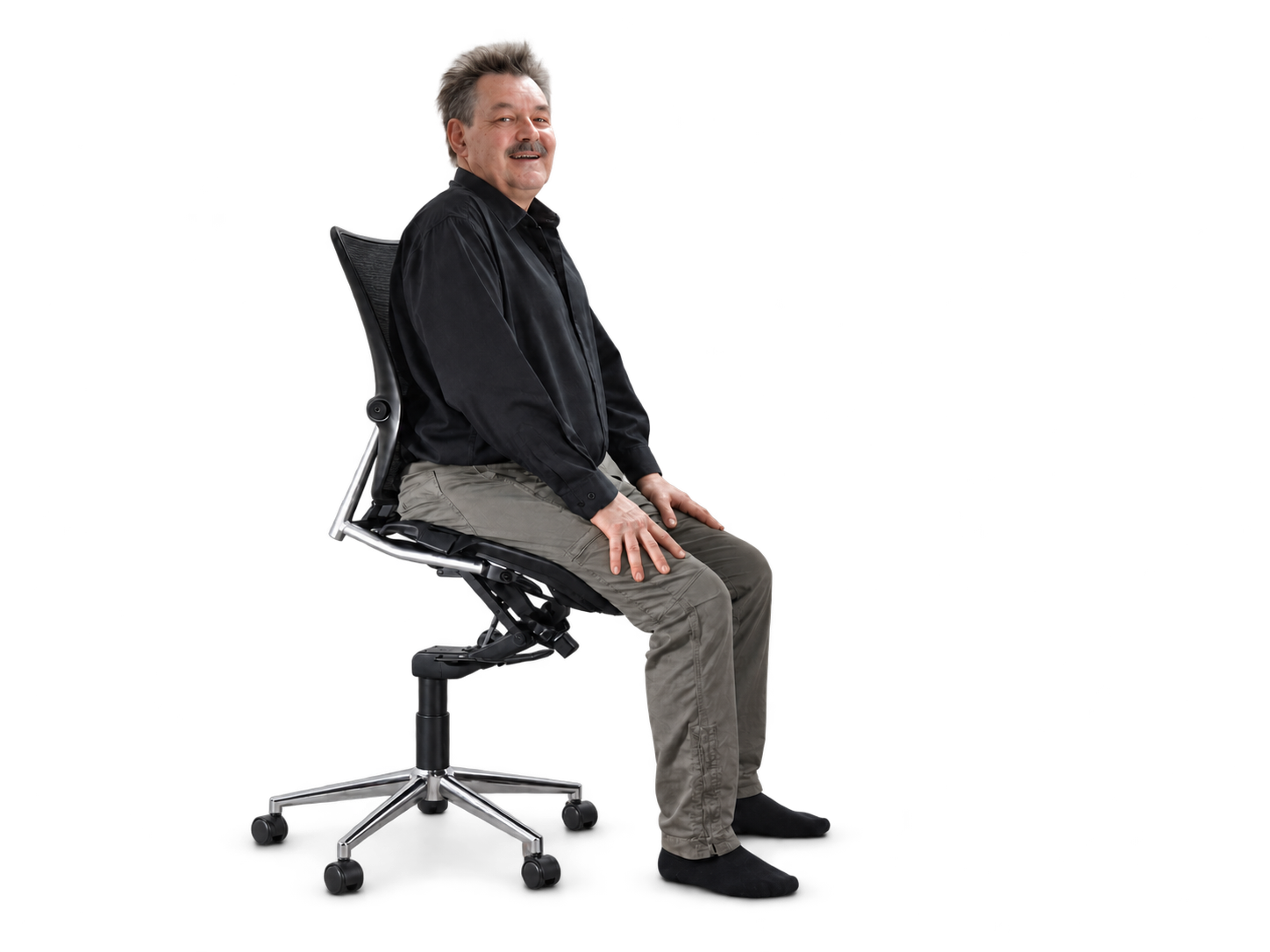
Our story · Klaus Kummer
40 Years.
1 Vision.
Klaus Kummer believed sitting could be different. Turning that belief into a chair took forty years of making, testing, and starting again.
Follow the storyIt began with
craftsmanship.
Cabinetmaking taught Klaus to work with precision, understand materials through his hands, and turn a drawing into something real.
Making things from scratch became an instinct that reached far beyond furniture.
Follow his curiosity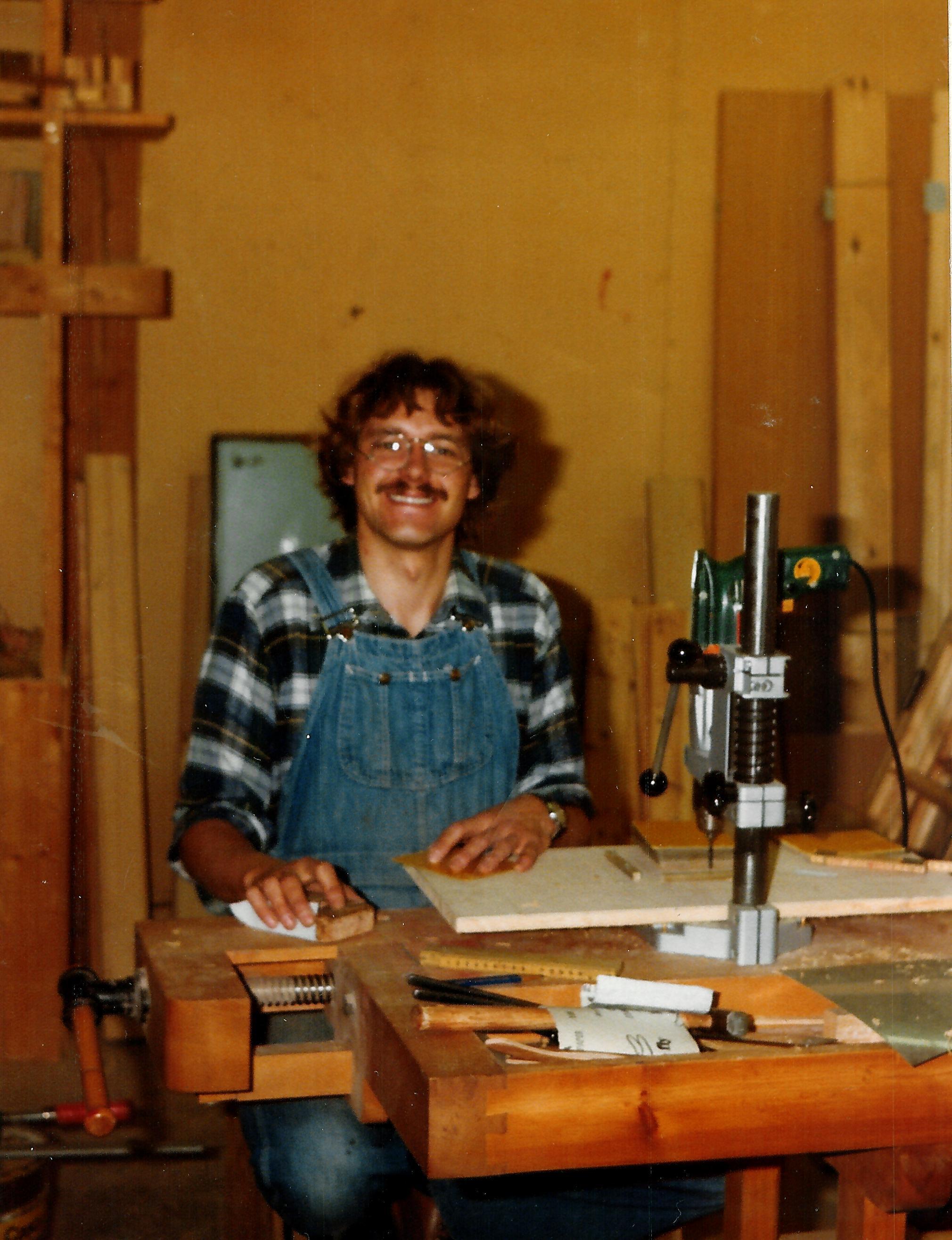
Then came the engineering spark.
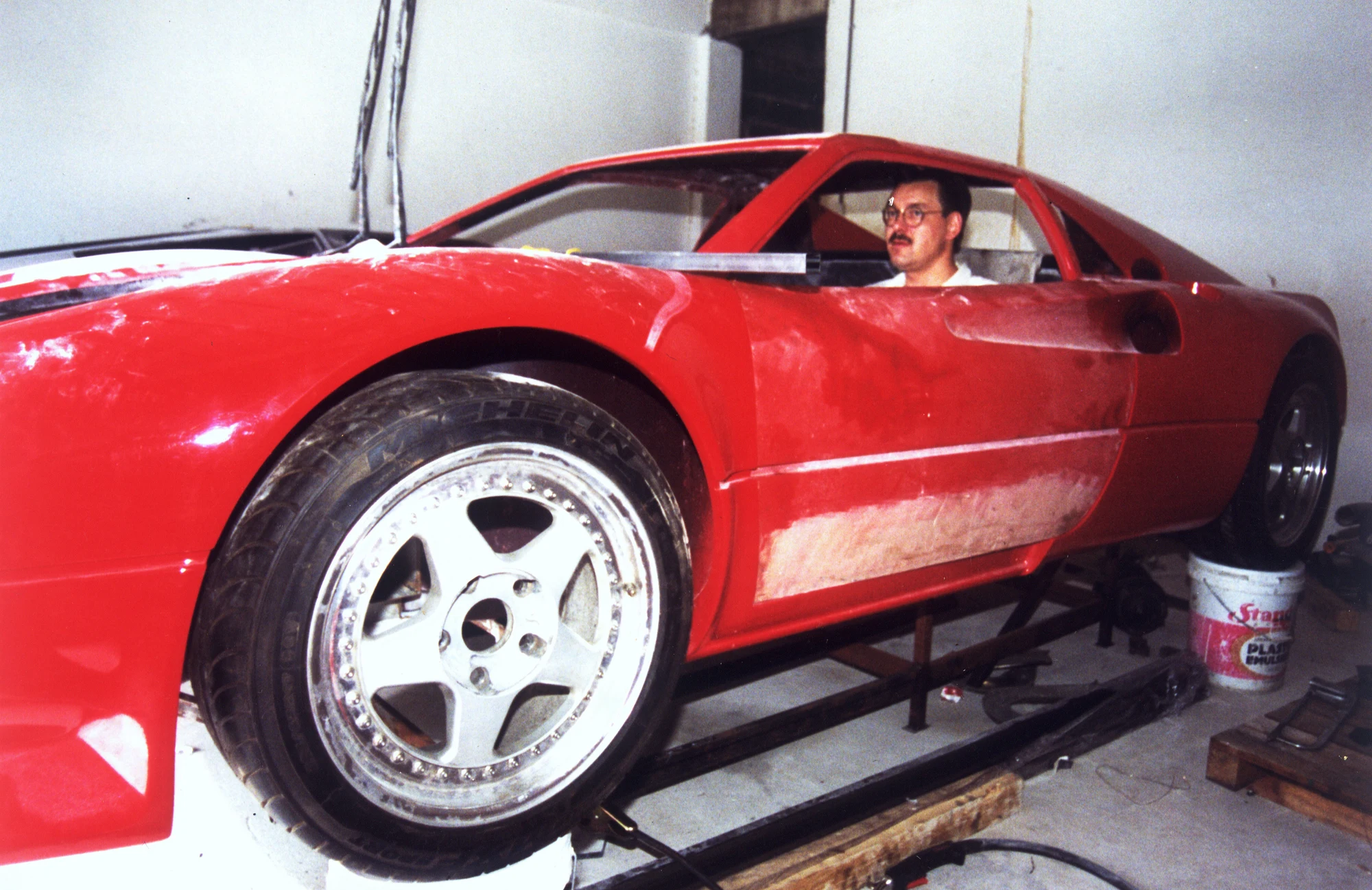
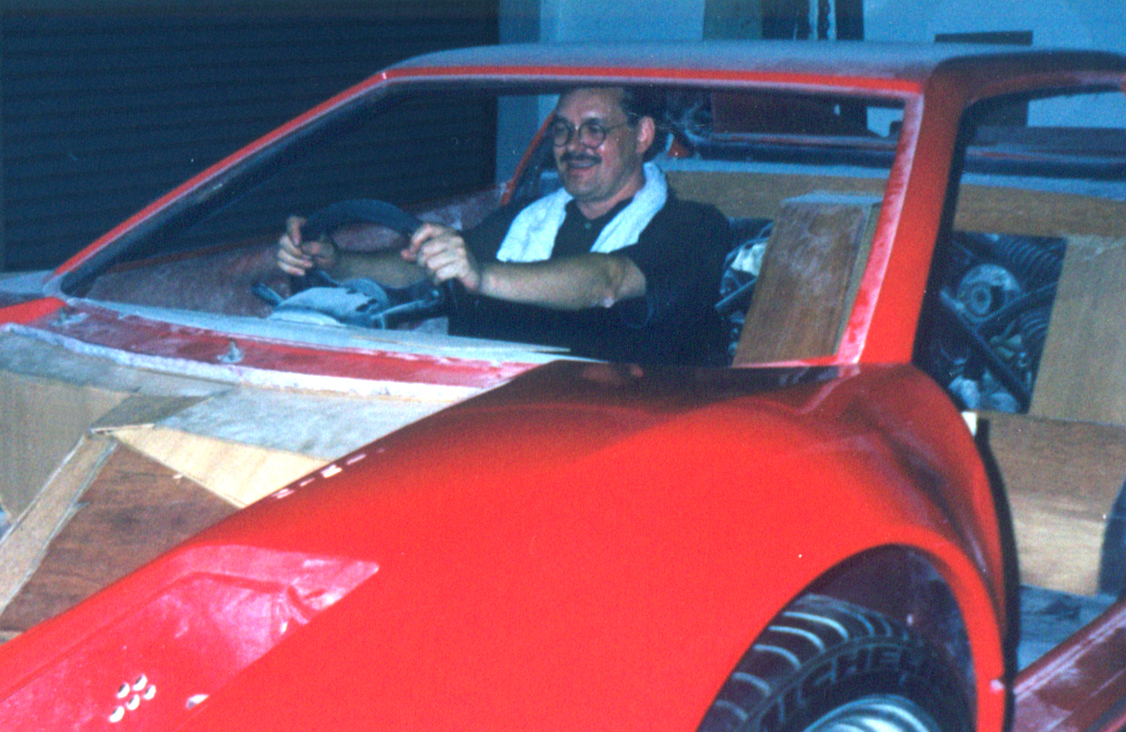
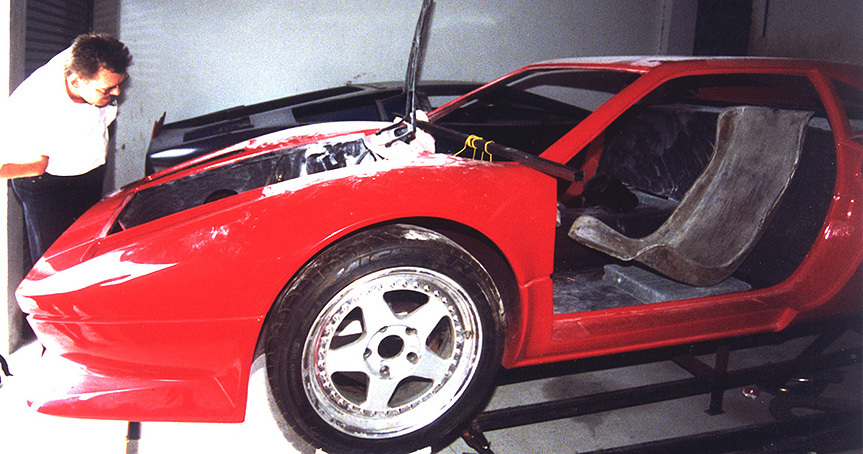
That instinct led Klaus to build a Ferrari replica himself, piece by piece.
The project sparked a fascination with engineering. Craftsmanship became a way to explore mechanics, geometry, and how individual parts could work together.


In a single leaf, he saw an oasis.
Klaus brought the same attention to the natural world. The branching veins of a leaf became paths. Its organic outline became the starting point for a green development.
The project revealed another side of him: a meticulous designer who could see a possibility in the smallest detail and imagine it at an entirely different scale.

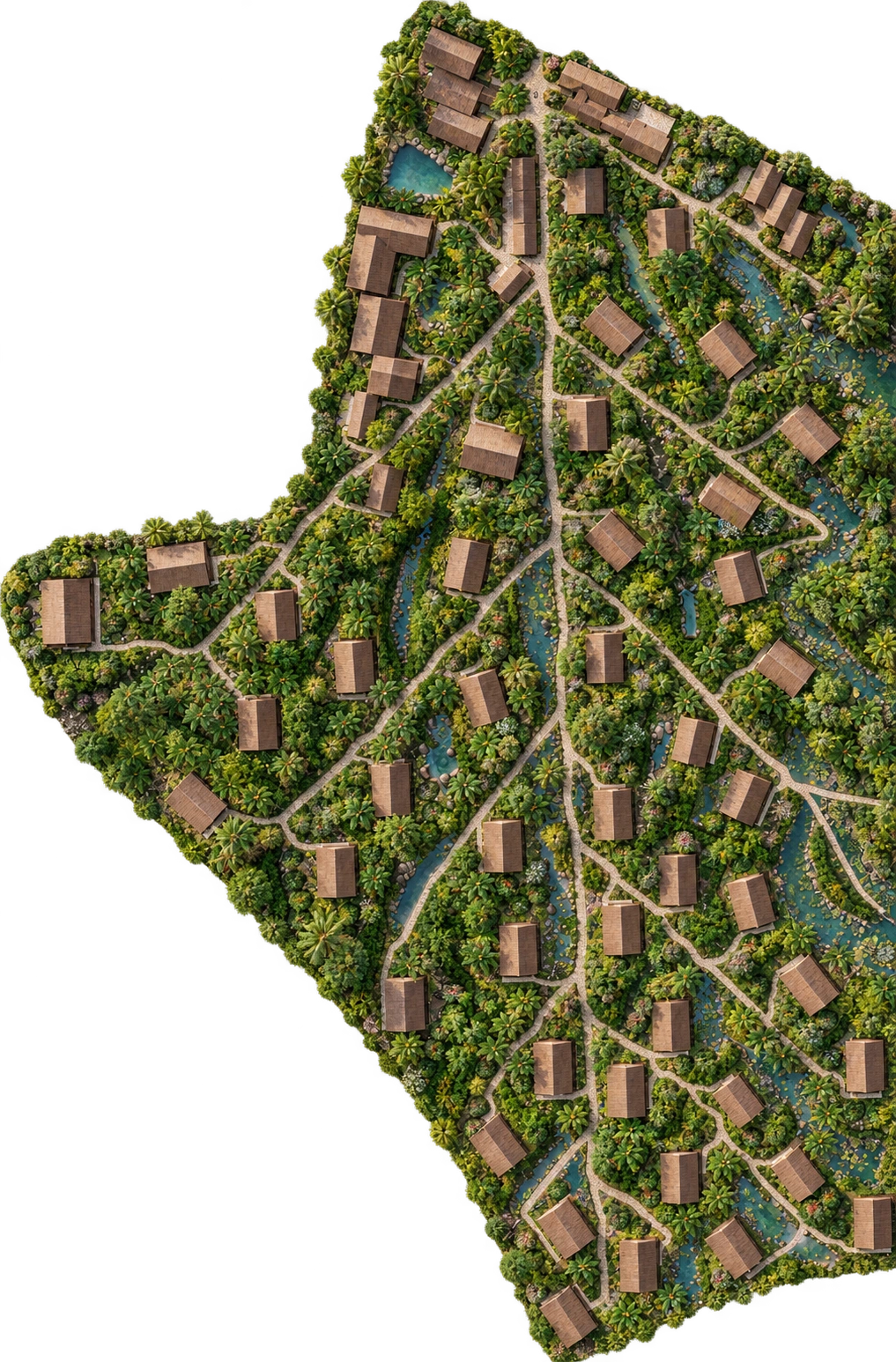
In a single leaf, he saw an oasis.
Klaus brought the same attention to the natural world. The branching veins of a leaf became paths. Its organic outline became the starting point for a green development.
The project revealed another side of him: a meticulous designer who could see a possibility in the smallest detail and imagine it at an entirely different scale.
A simple act.
An unresolved problem.
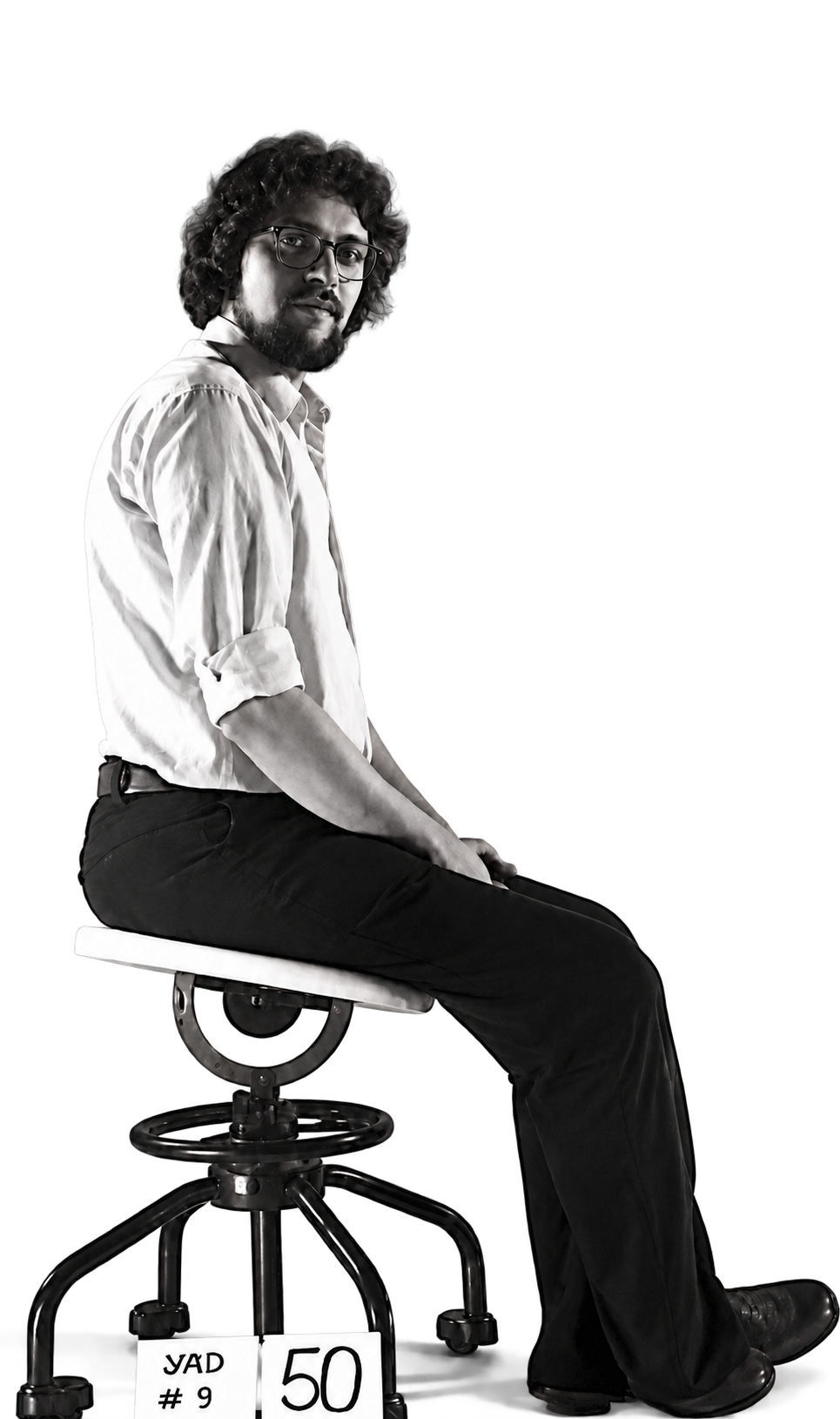
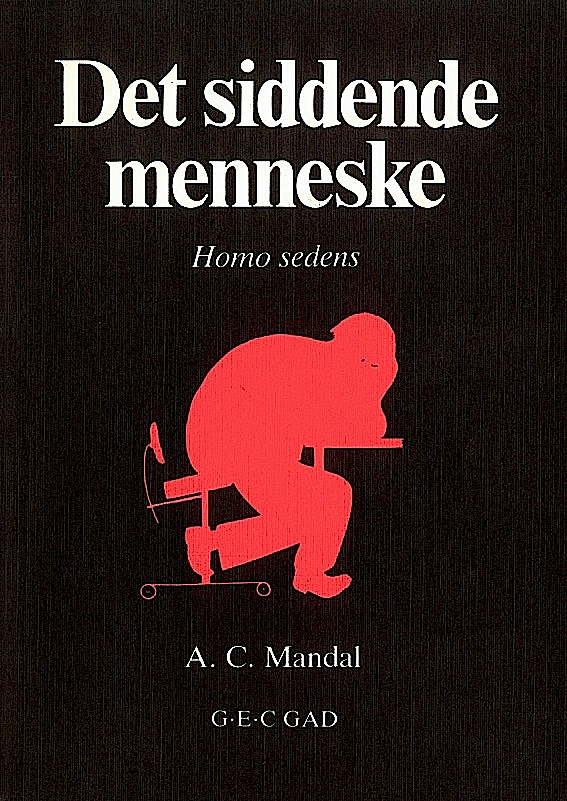
At university, Klaus met Dr. A. C. Mandal, his lecturer, whose work challenged conventional ideas about sitting.
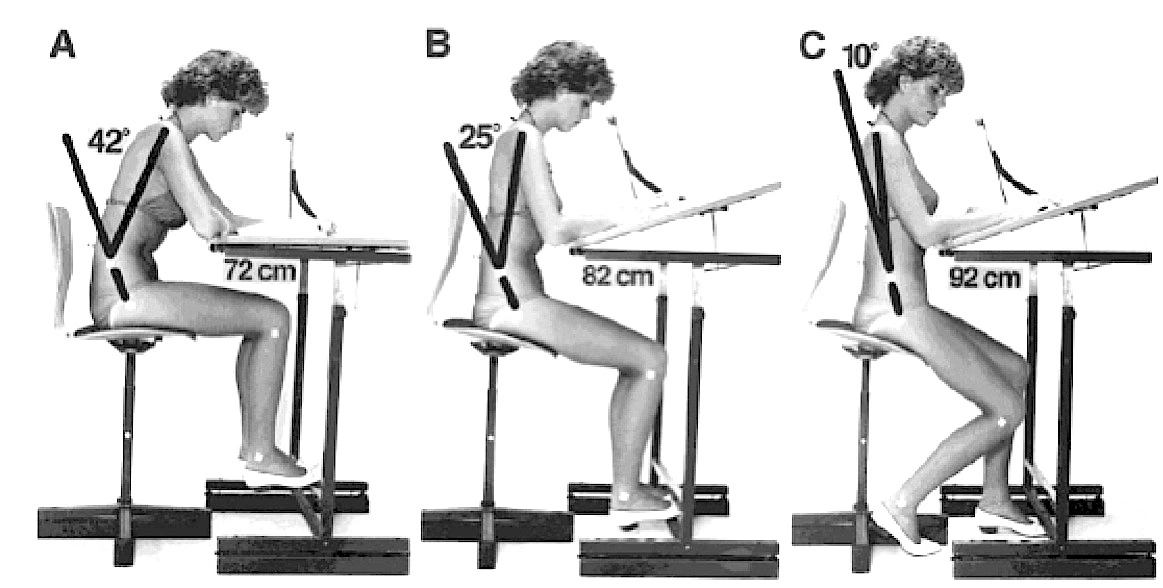
It fascinated him that something so ordinary could still present such an unresolved design problem. Chairs and workspaces continued to be built around a 90-degree sitting position. Klaus began questioning that starting point.
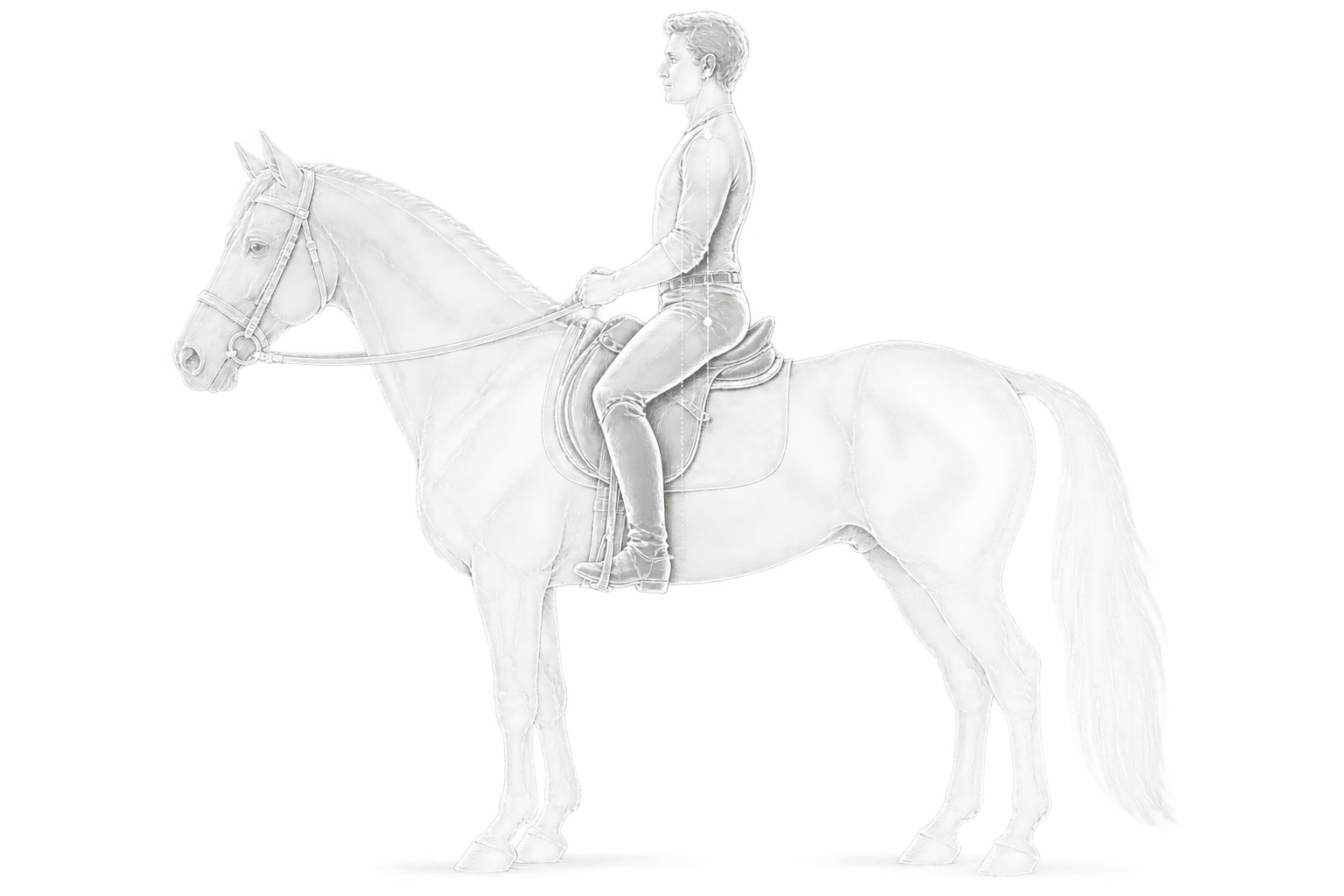
Could a chair be designed around the body instead?
In 1981, he built his first prototype.
T-Mech™.
Years spent finding the movement.
The challenge went deeper than the shape of a seat. Klaus had to work out how it should move.
Tilting it forward was only part of the answer. The geometry had to keep the person supported as their position changed, without making them slide forward.
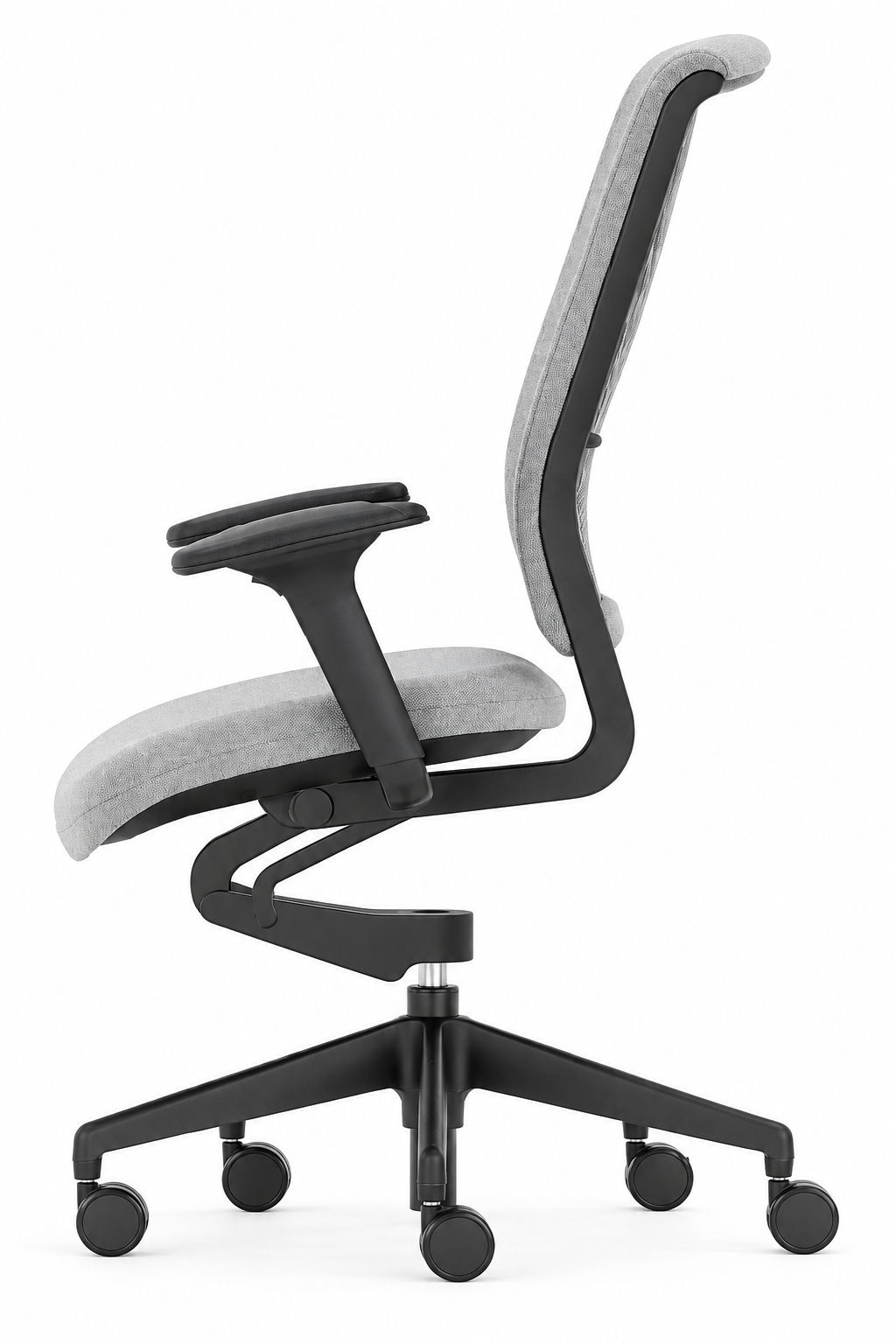
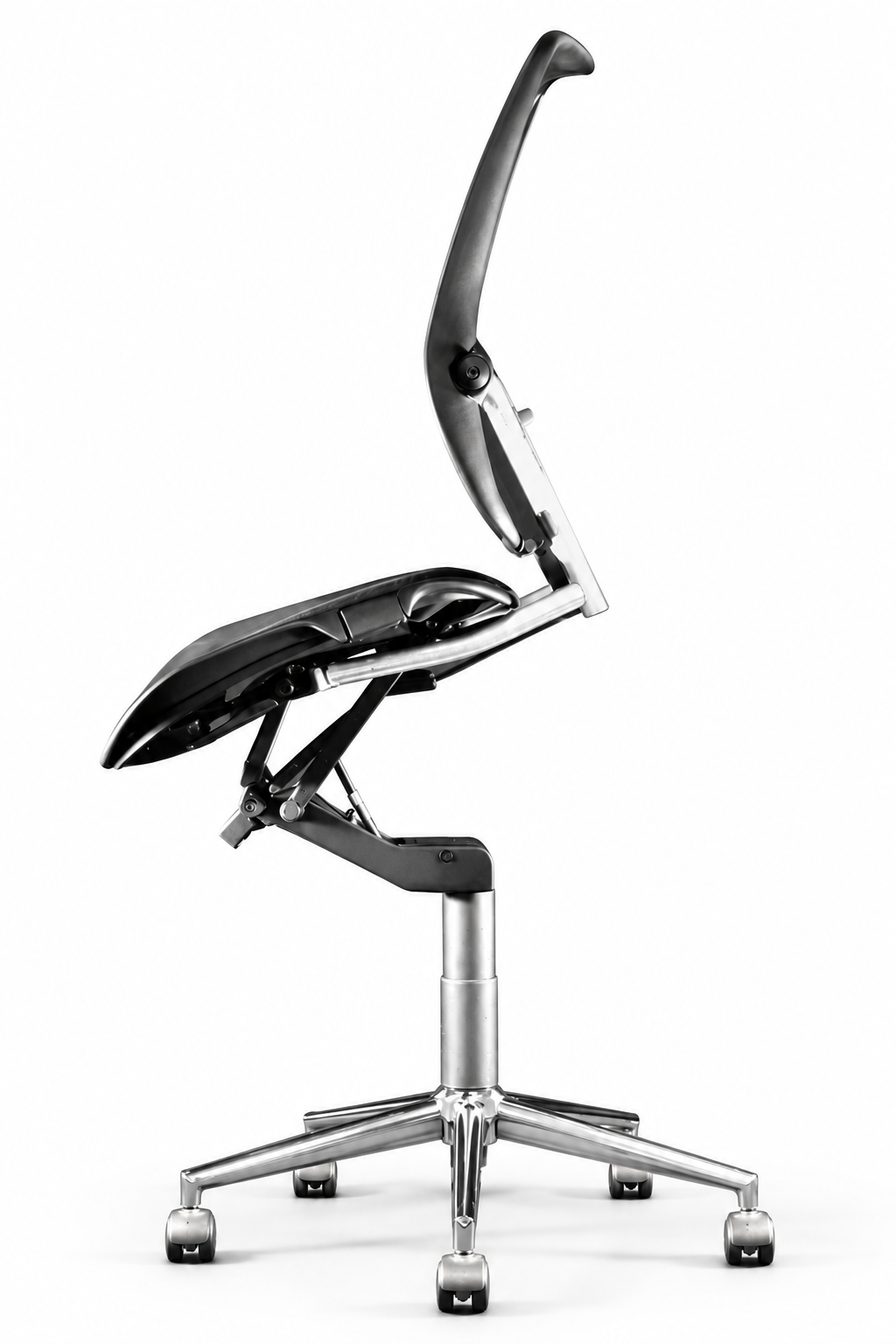
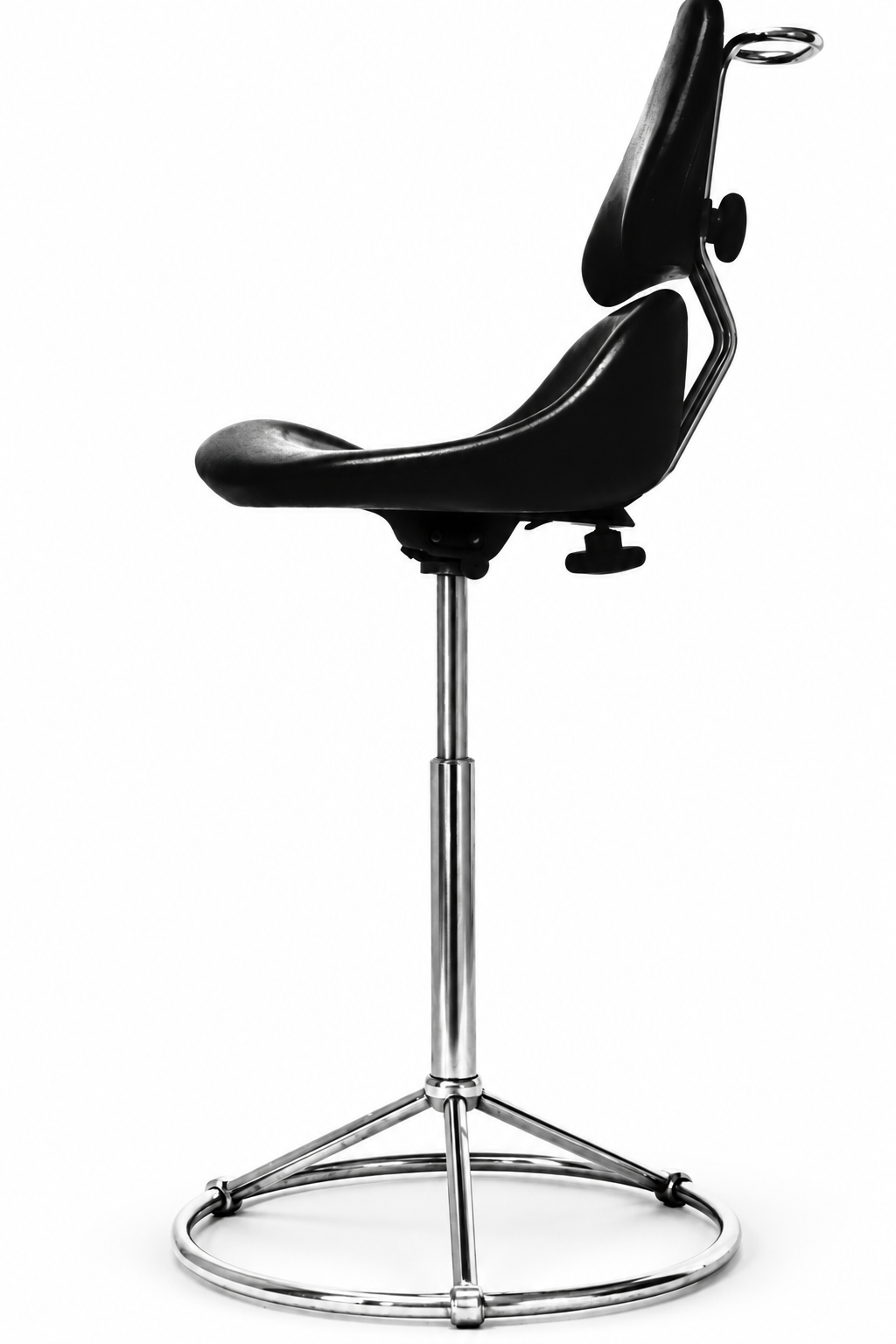
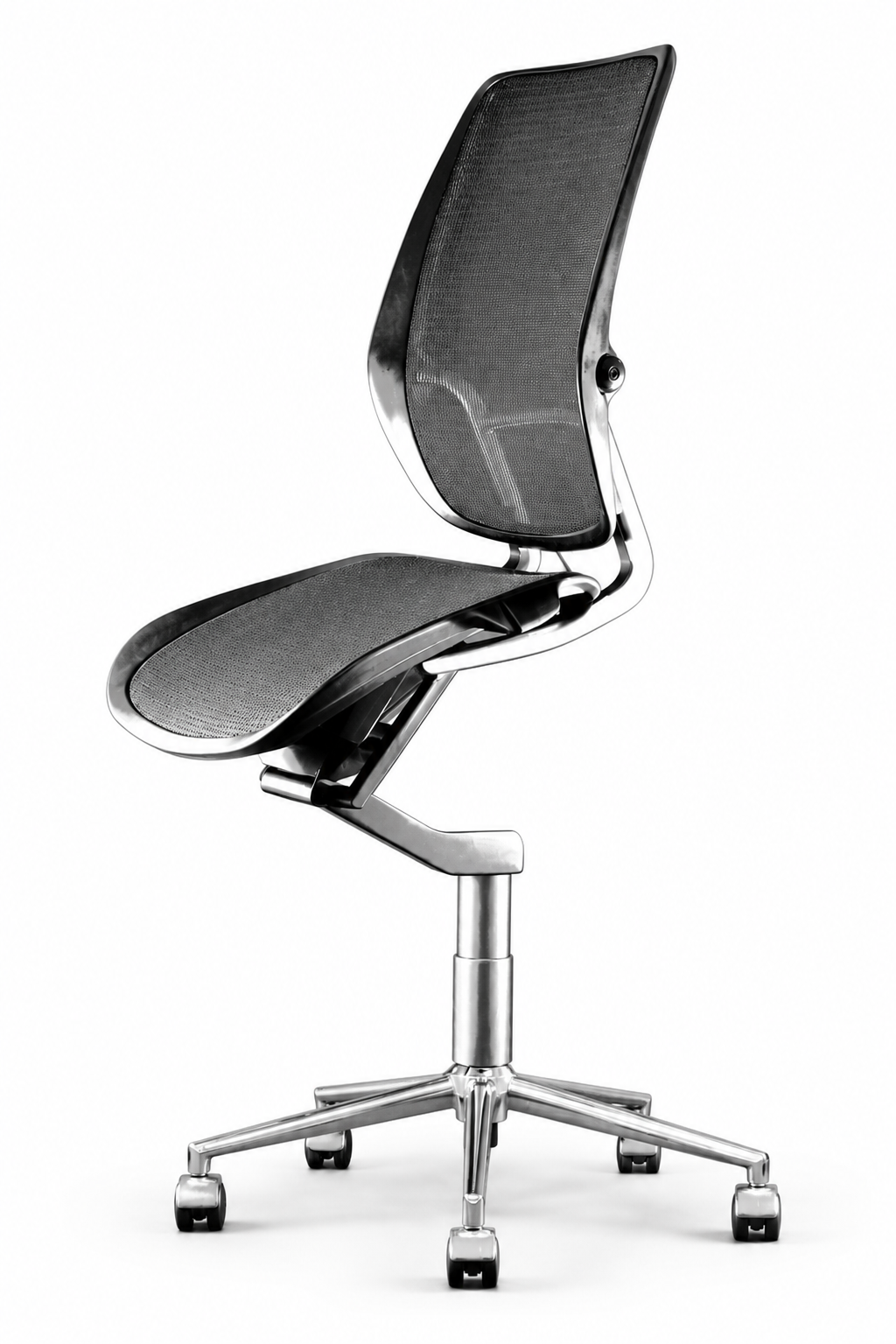
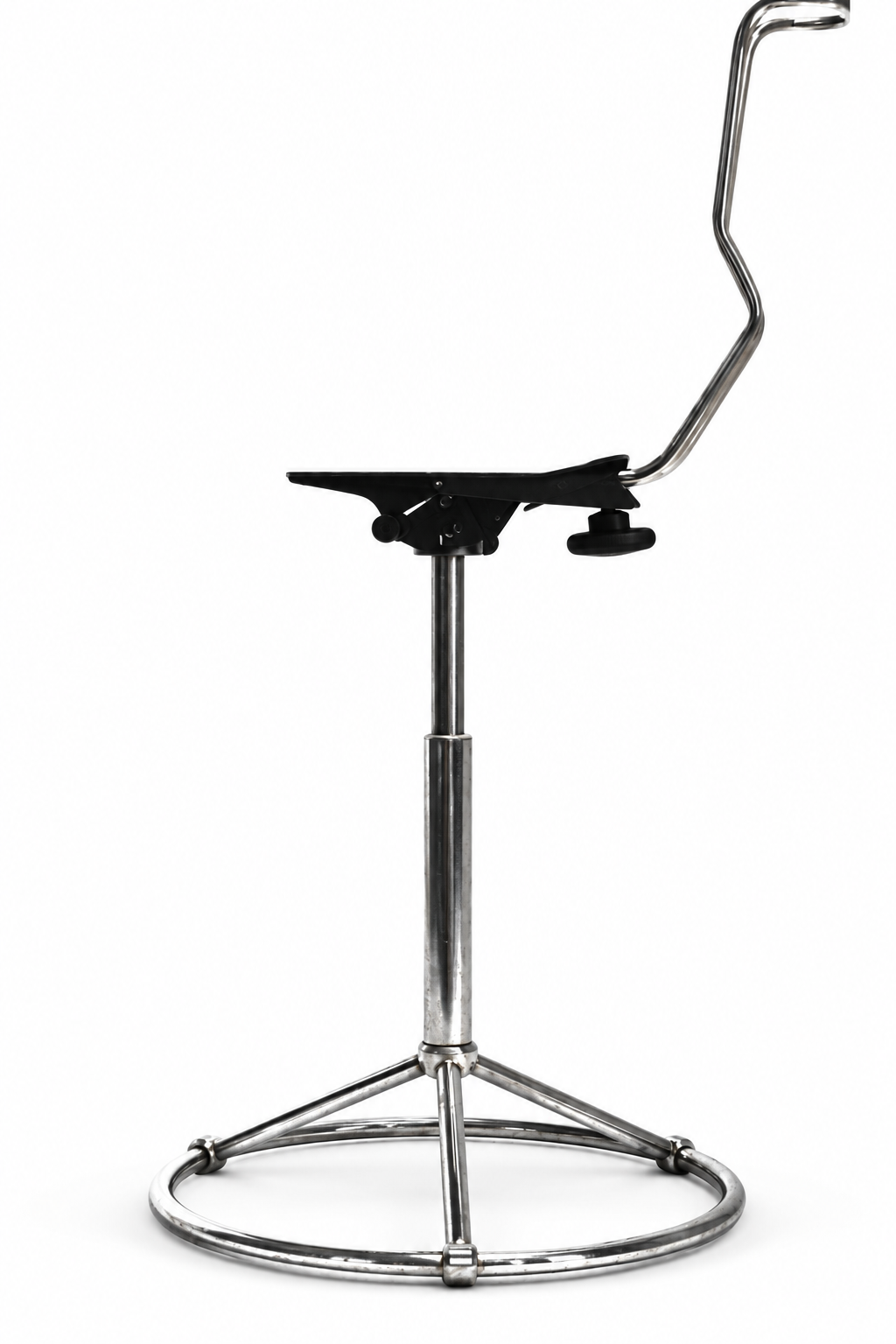
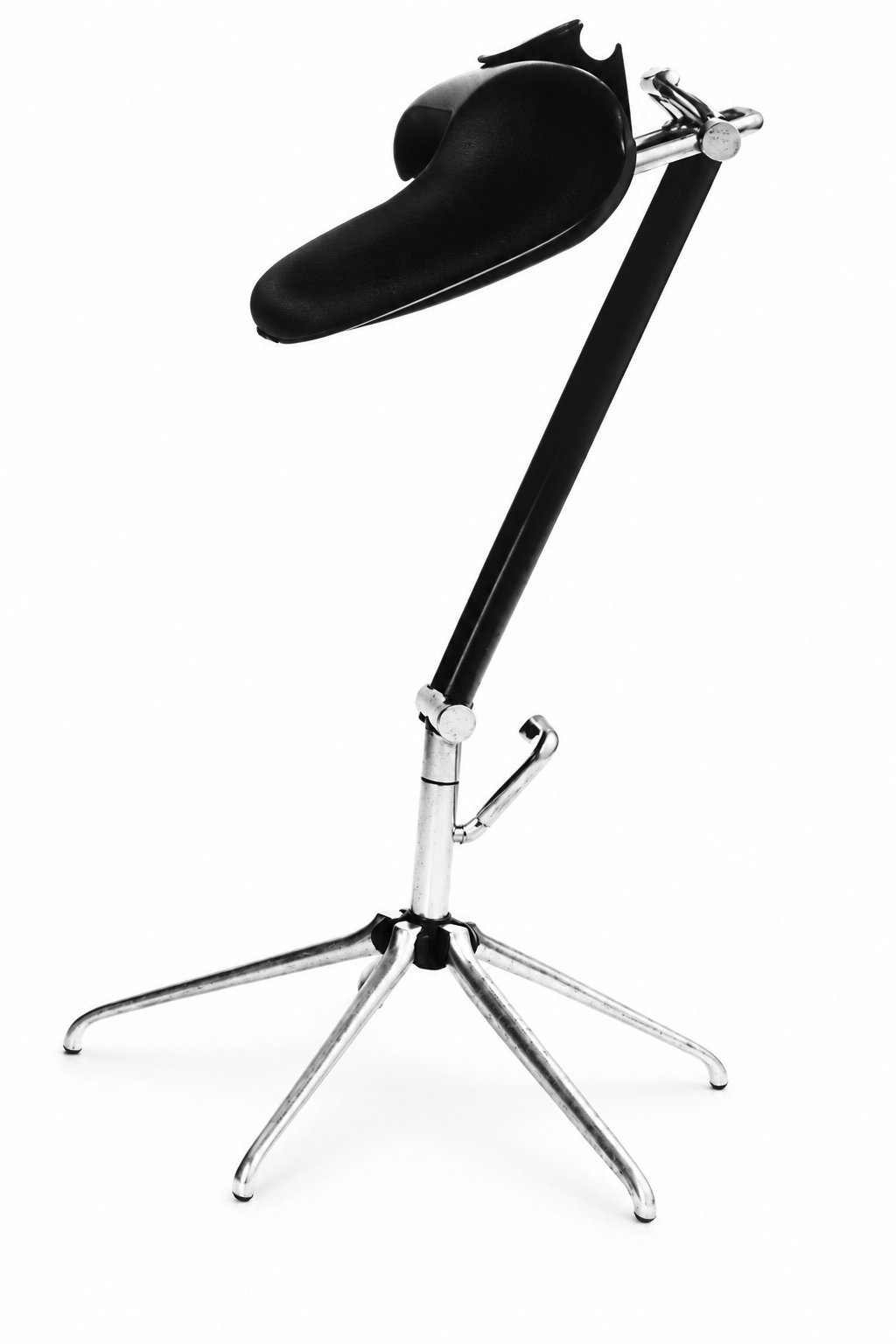
Finding that movement took years of developing mechanisms, testing prototypes, and discarding solutions that still fell short.
“I have spent frustrating years to develop one prototype after the other, to just discard them again and again.”Klaus Kummer
The idea needed
a different workspace.
When Klaus presented the concept to major furniture companies, he was told to come back in five or ten years. One reason was practical: height-adjustable desks were not yet widely available. Elevated Seating needed a workspace that could rise with the person using it.
Klaus kept developing the chair. The desks would catch up; the question of how to support the body through movement still needed an answer.
Making the idea work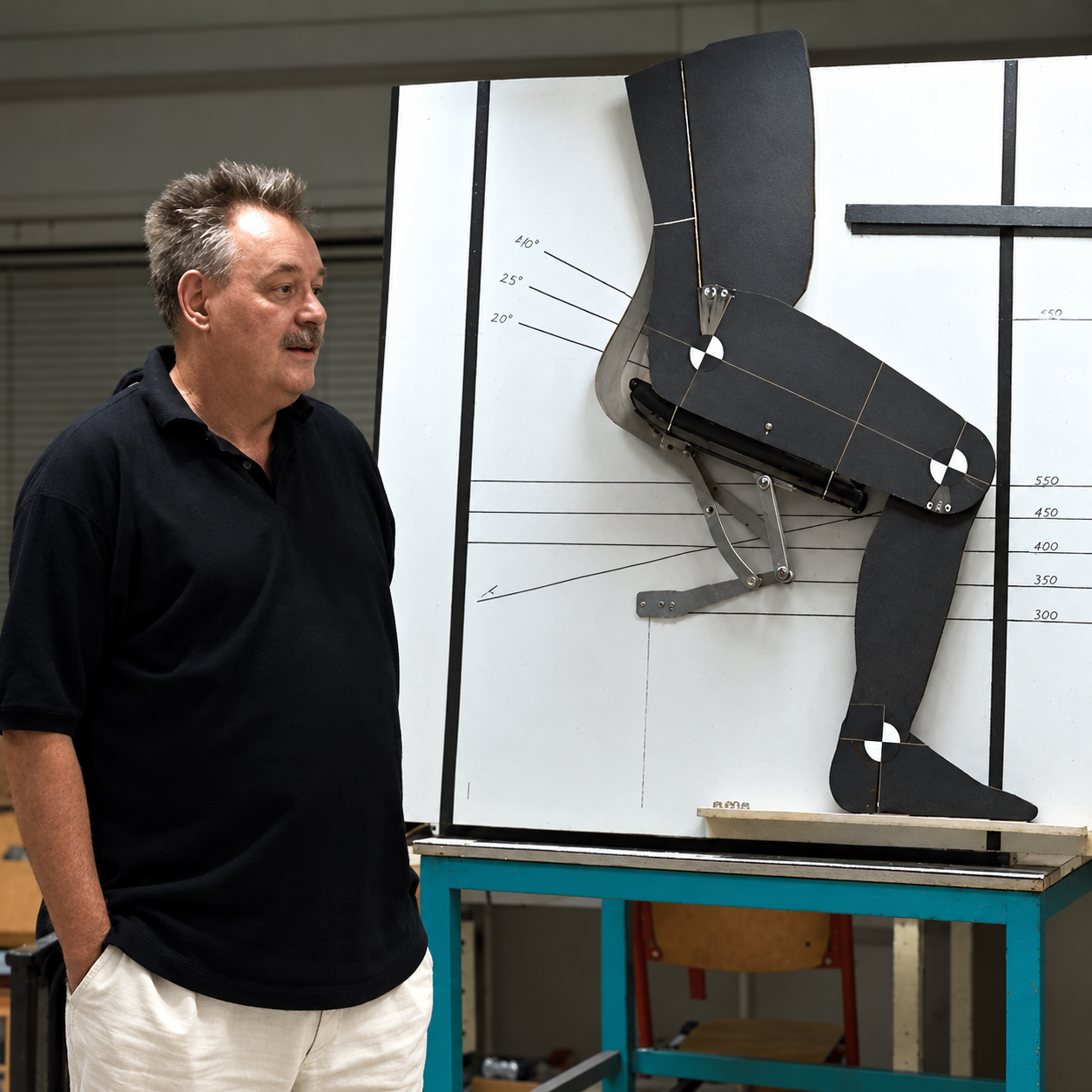
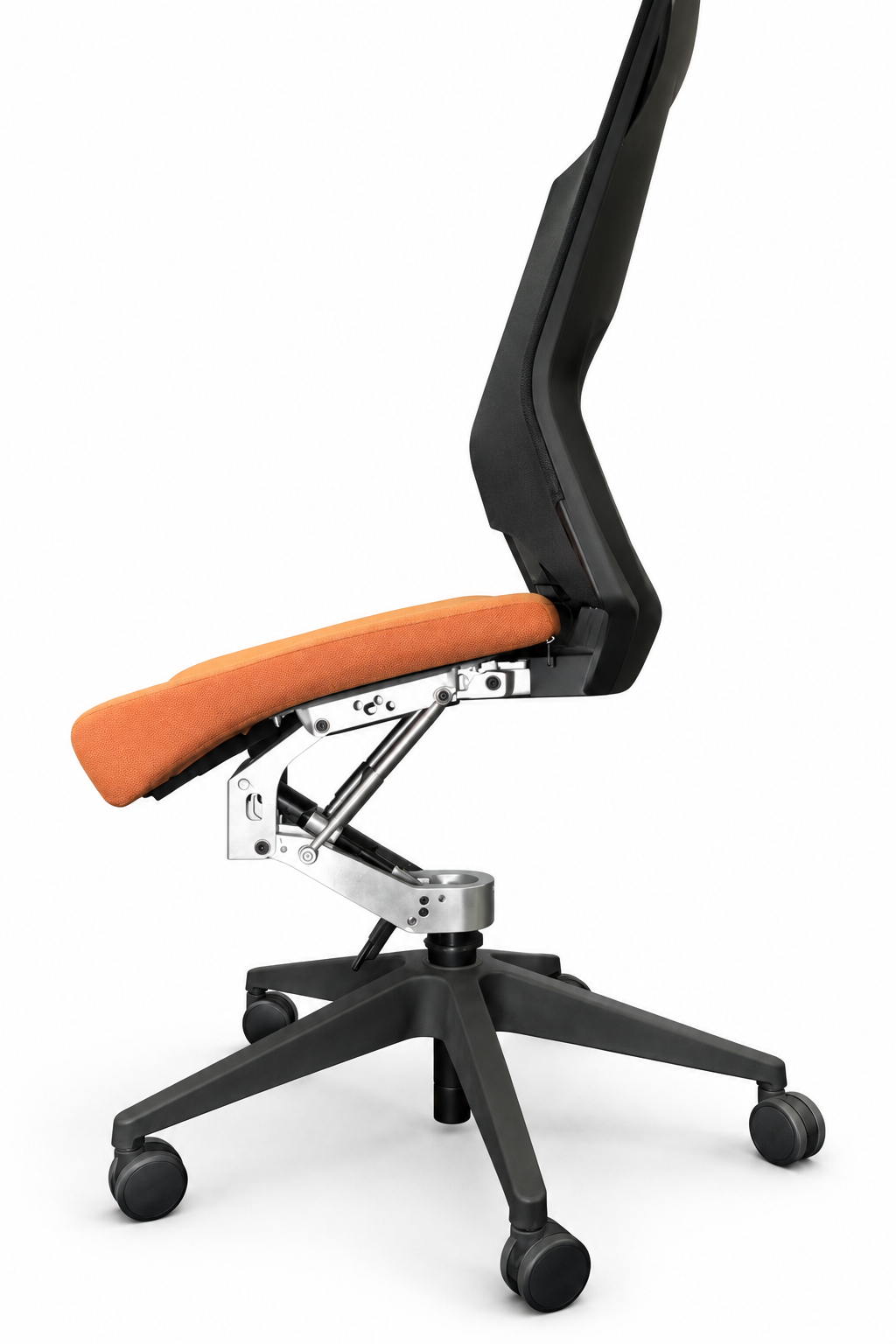
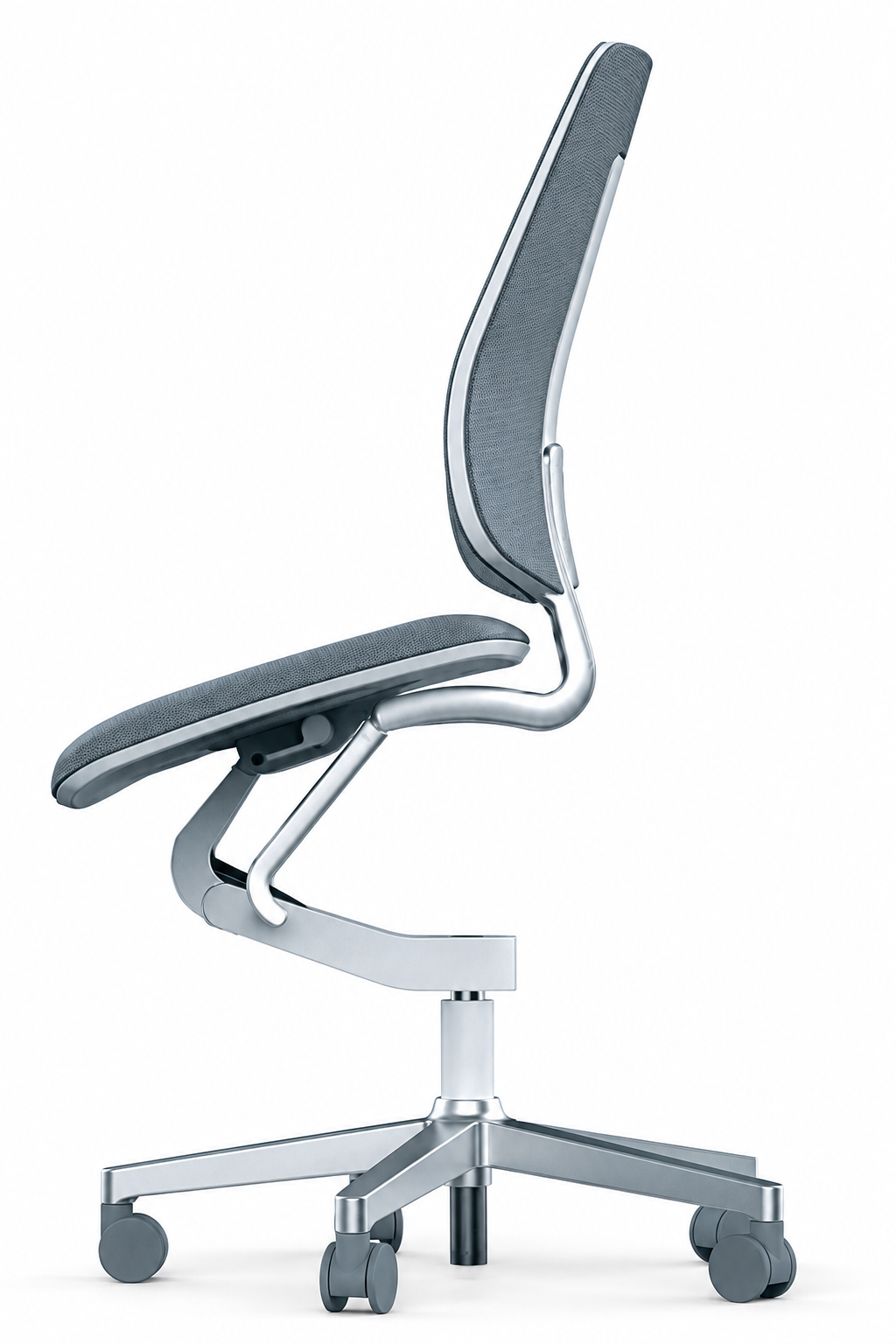
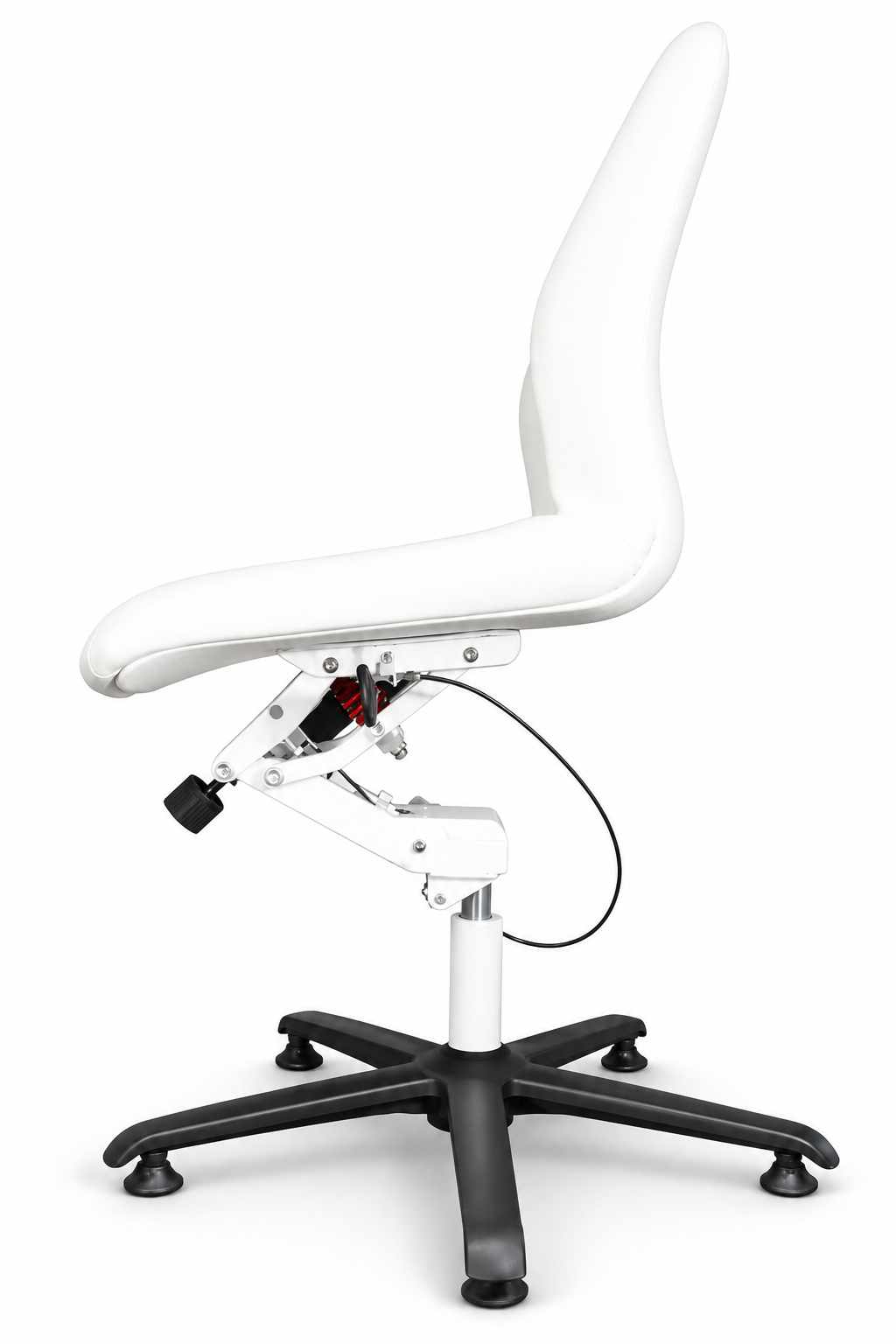
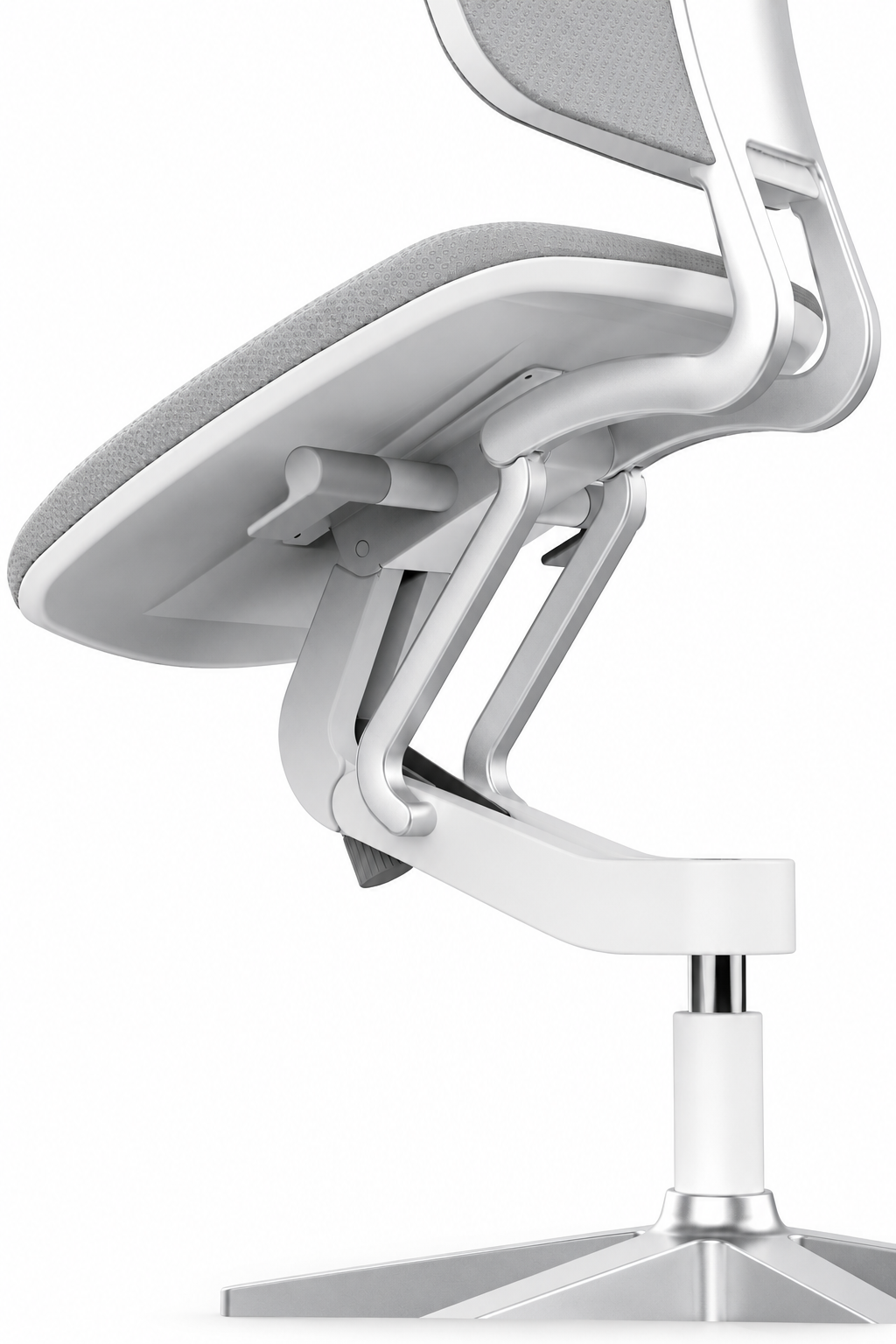
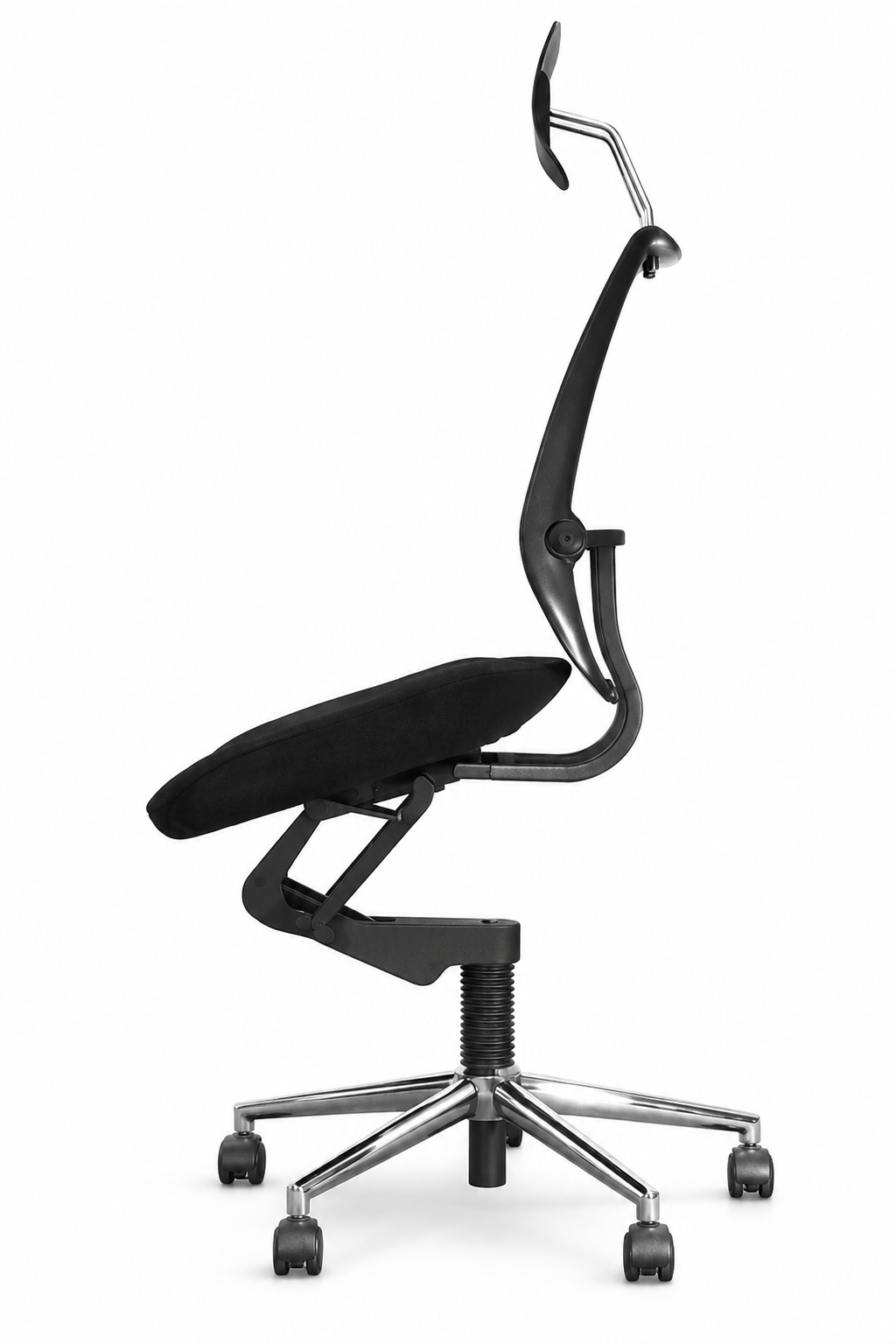
Prototypes Along the Journey
1981–2026
Making the
idea work.
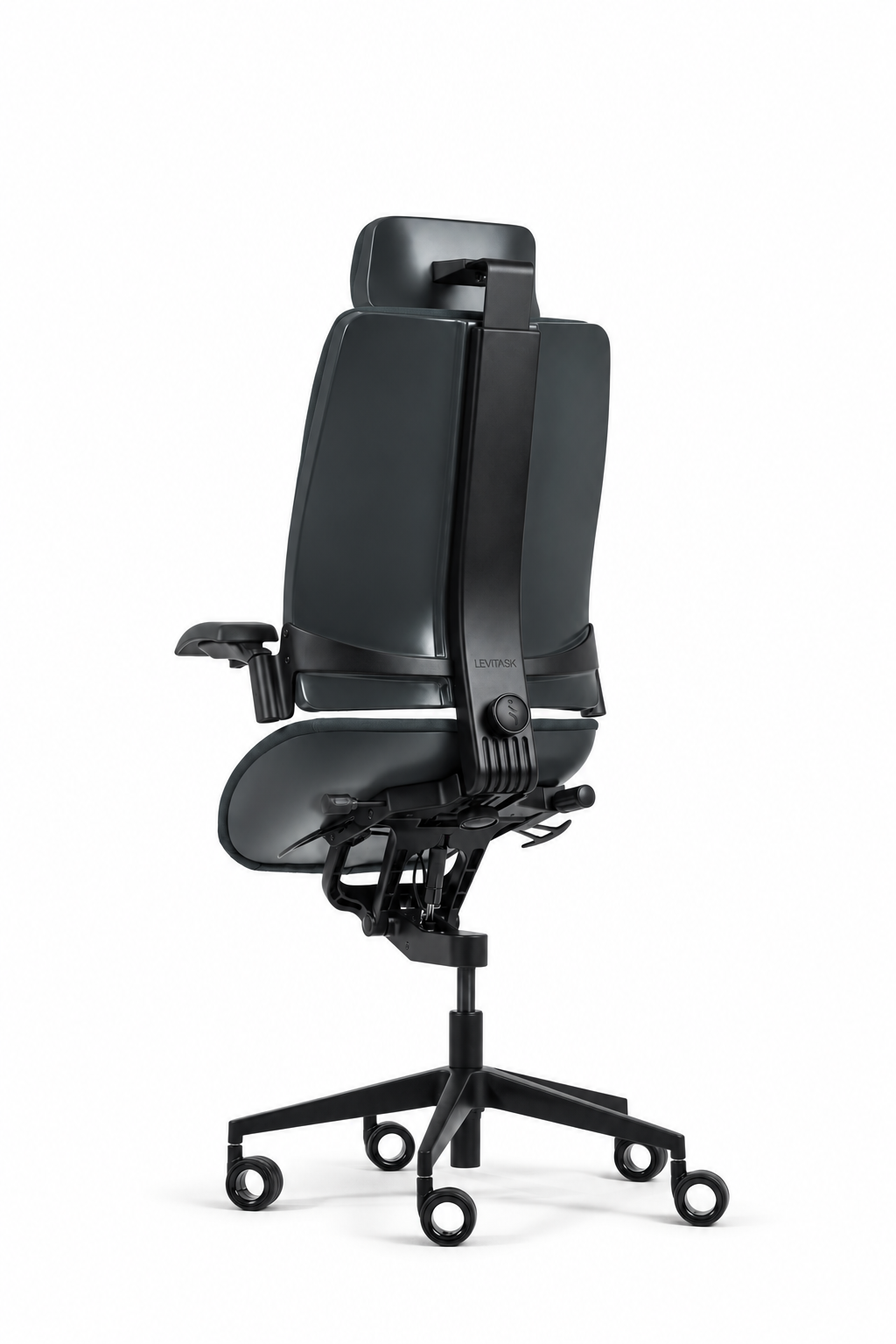
The movement centred on the knee.
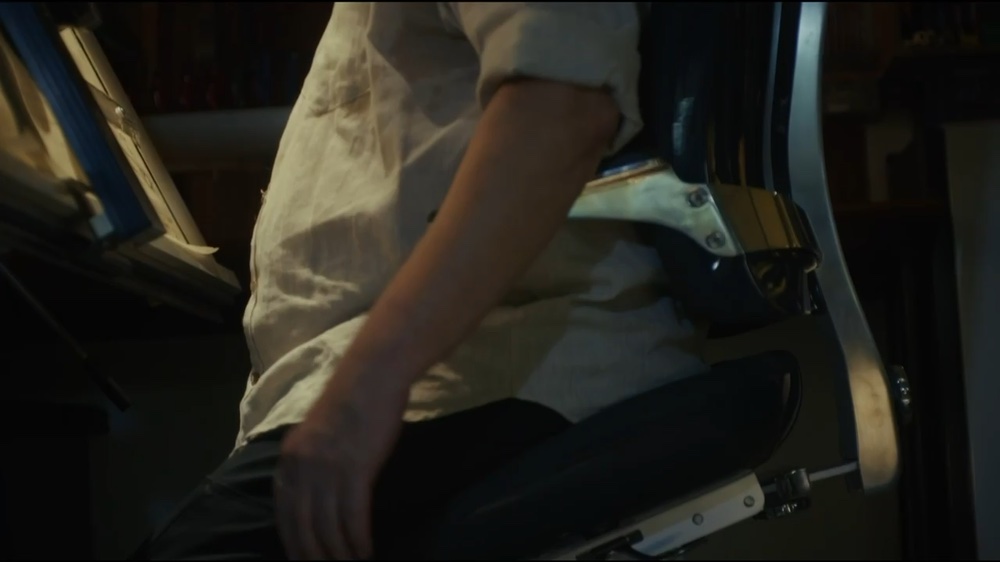
T-Mech™ guides the seat around the knee, maintaining support beneath the thighs as the position changes.
Let Klaus explain the thinking behind it.
Inspired by the curvature
of the stingray.
Nature had already given Klaus the starting point for an entire development. It would also help give his chair its form.
The stingray fascinated him: the way it seemed to float, its flowing outline, and the absence of sharp corners.
Its sweeping curves became an inspiration for the seat pan, bringing his eye for natural forms together with decades of work on movement.
A vision became
a company.
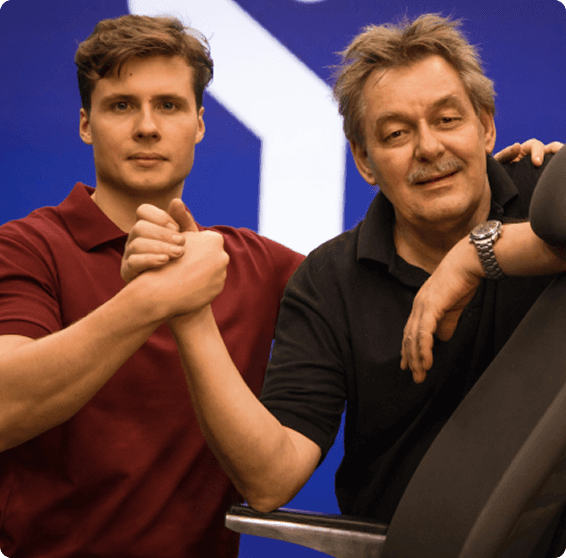
In 2021, Michael Gotfrid joined Klaus. As CEO, he began building the team that would bring Elevated Seating into the world.
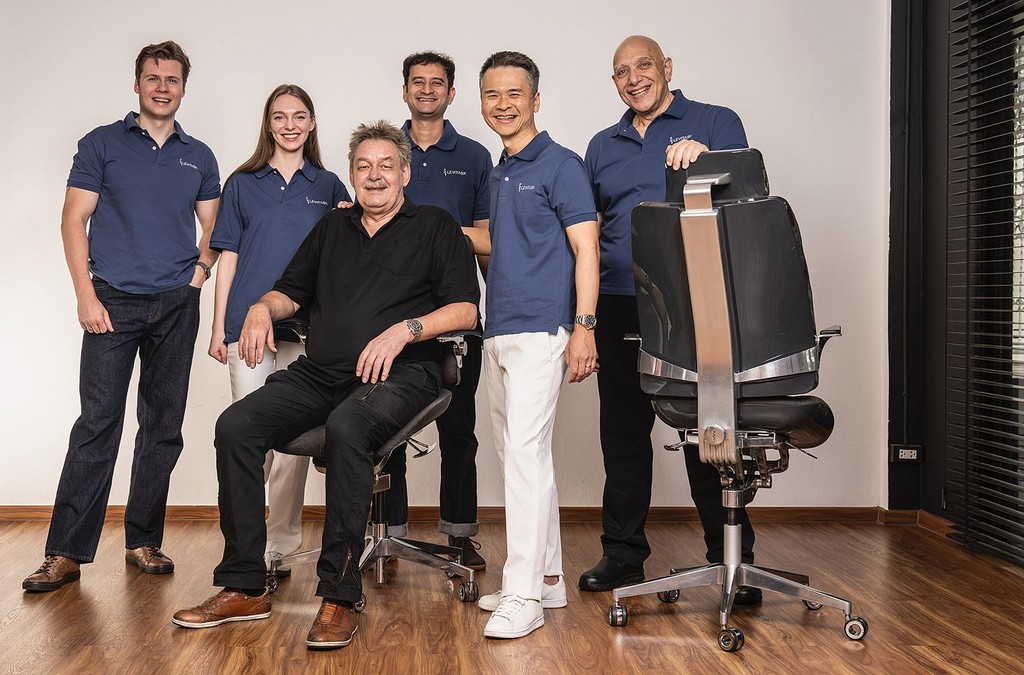
Klaus brought the vision. Michael built the team. Together, they became Levitask.
The vision became
something shared.
For decades, the story had been about Klaus finding a different way to sit. In October 2025, it became a story other people could be part of.
The Vision Chair launched on Kickstarter. Our first backers chose to support a new approach to sitting, helping us take the next step from years of development towards bringing the chair into everyday life.
They became our founding community—and part of the story of Levitask.
Then, the global reveal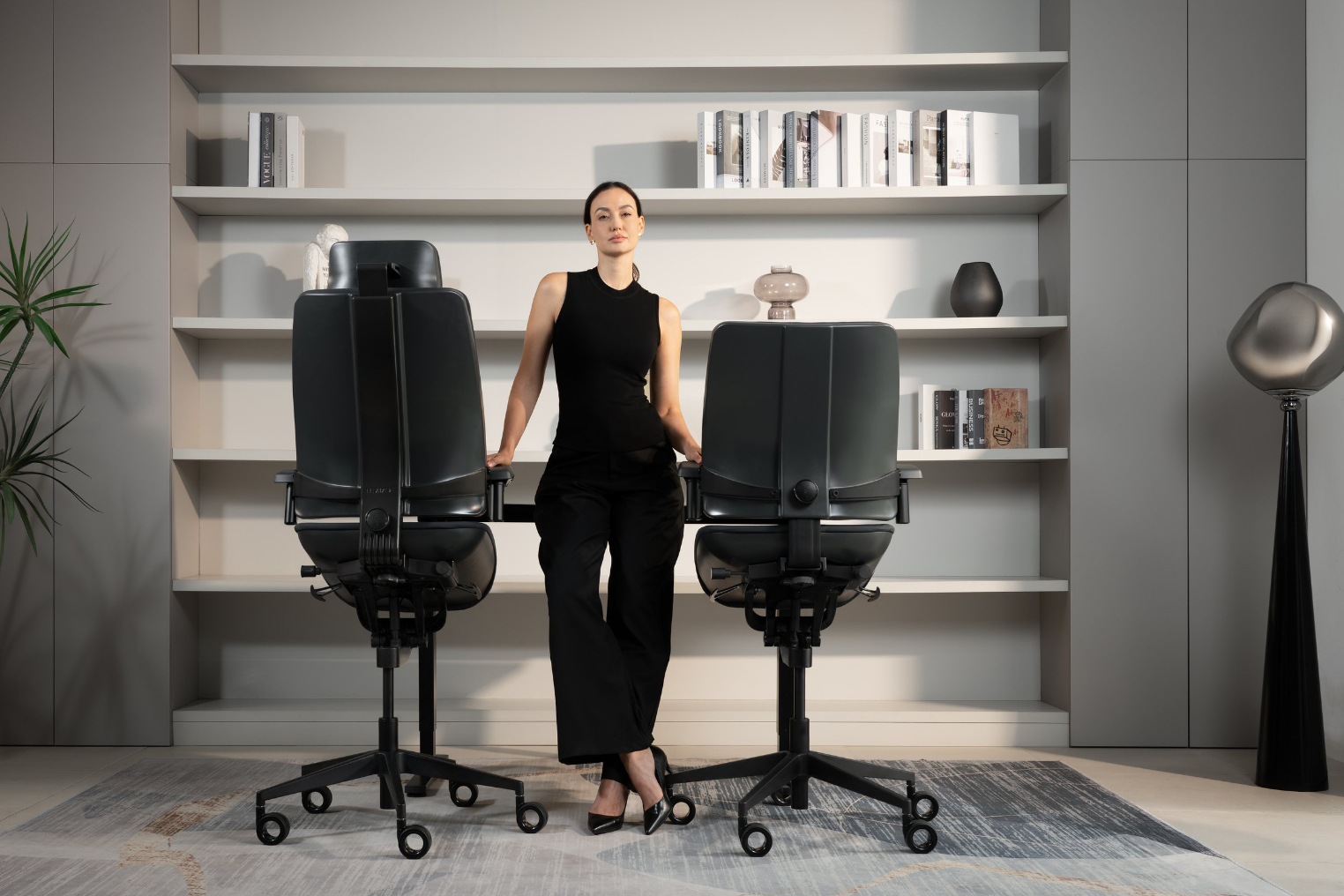
Forty years of work.
A moment of recognition.
At NeoCon in Chicago, the Vision Chair made its global industry reveal. The idea Klaus had spent decades developing could now be experienced by the wider design and workplace community.
The chair received the Best of NeoCon 2026 Innovation Award. For our team, that recognition marked an important moment in a much longer journey.
From the first prototype to the exhibition floor, the question had stayed the same: how could sitting be different?
The journey continues in Europe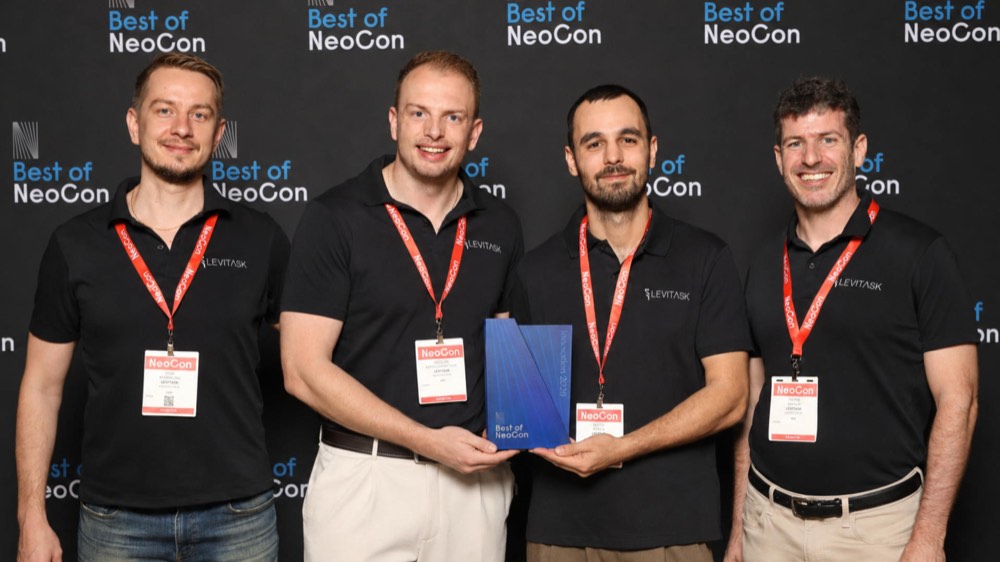
A European debut.
The story continues.
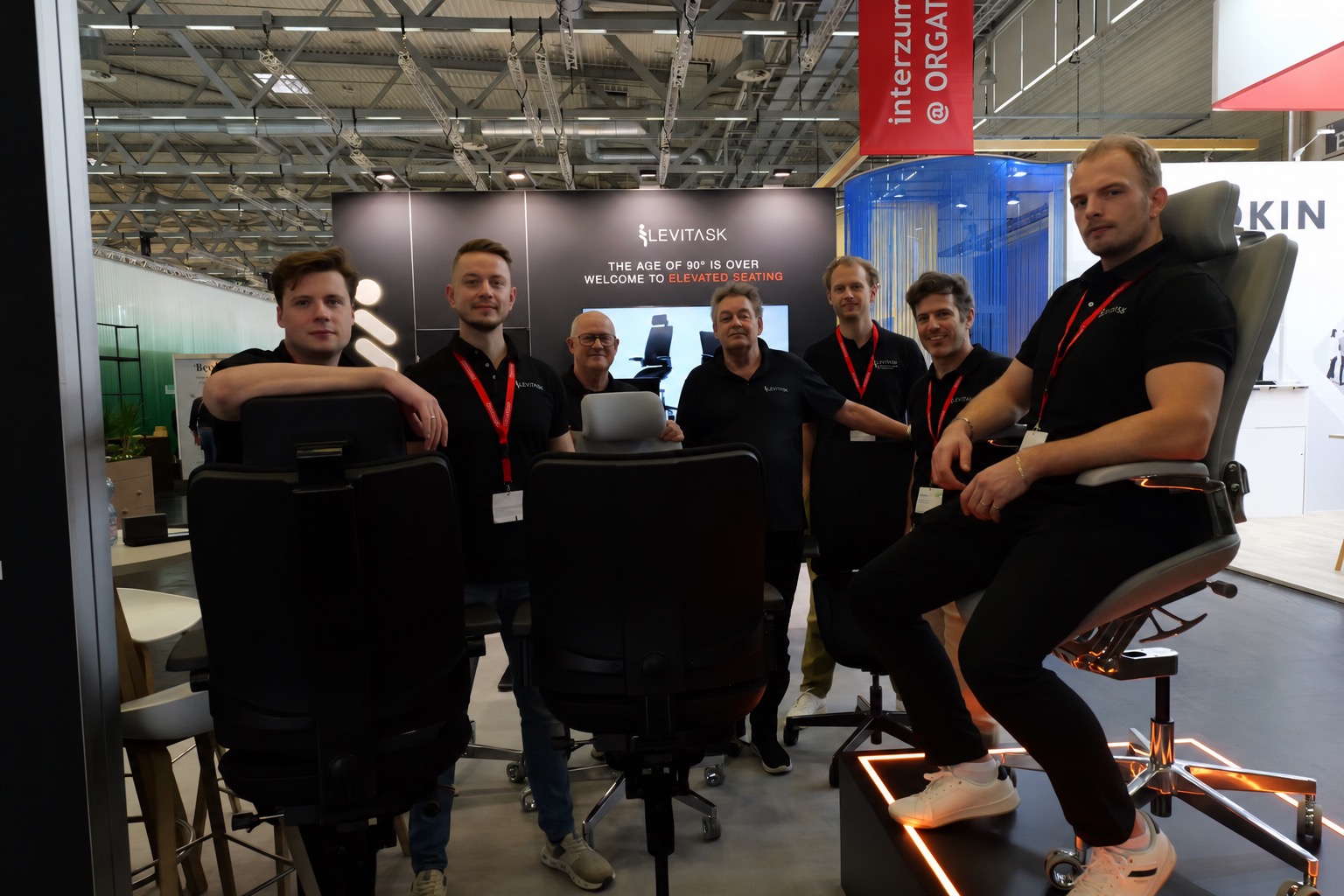
In October 2026, the journey brought Levitask to Cologne. ORGATEC marked the Vision Chair’s European trade debut, introducing Elevated Seating to the European design and workplace community.
What began with one maker’s question was now a conversation with people shaping the future of workspaces.
The next chapter is about bringing that idea into everyday life: a chair and a workspace that make room for a different way to sit.
Explore Elevated Seating